Bill C-51, introduced in 2015, reshaped how Canada approaches national security and counter-terrorism. The goal was to strengthen protection against threats, but it quickly sparked debate over privacy, free expression, and government authority. The law’s broad reach prompted years of public concern, court challenges, and reform efforts.
While parts of Bill C-51 remain in place, later updates, most notably the National Security Act (2017) and Countering Foreign Interference Act (2024), added new oversight and privacy safeguards to address many of the original criticisms.
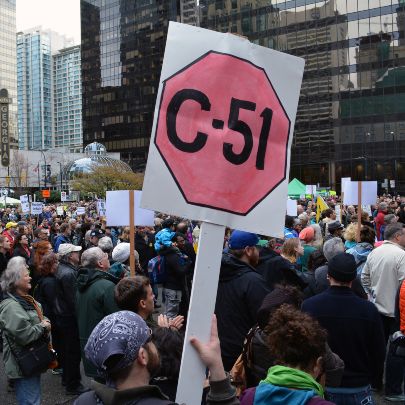
1. What Is Bill C-51?
In simple terms, Bill C-51, the Anti-terrorism Act (2015), is a law that was passed to help the Canadian government prevent terrorism. It came about after some tragic attacks in Quebec and Ottawa, which really got people worried about national security. The government decided they needed stronger tools to stop any future threats, so they introduced Bill C-51. But while the law aimed to improve security, a lot of Canadians – and experts – think it goes too far and could hurt our personal freedoms.
While the law has been modified by later acts, many core ideas from C-51 still influence Canada’s security policy in 2026, especially in areas of data retention and information exchange between agencies.
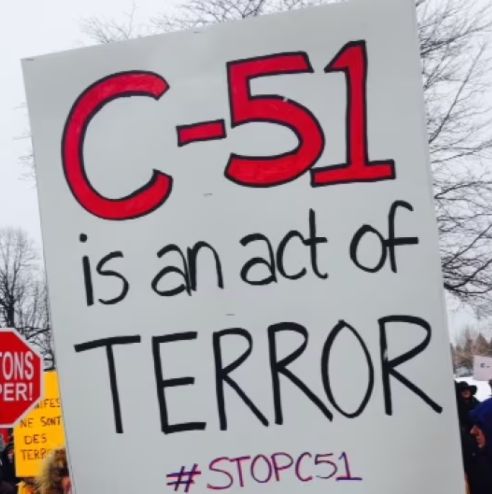
2. What ‘Security’ Means Now Under Bill C-51
Before Bill C-51, “security” mostly meant protecting people from physical harm, like stopping terrorist attacks. But the new law expanded what security means. Now, security includes not only public safety but also things like protecting Canada’s economy and financial stability and stopping any disruptions to public life.
So, what does this mean for us? It means peaceful protests – like demonstrations about environmental issues or Indigenous land rights – could now be seen as a threat to national security, even if they aren’t violent.
3. CSIS Gets More Power
Canada’s spy agency, CSIS (Canadian Security Intelligence Service), used to just gather intelligence to help stop threats. But with Bill C-51, they’ve been given a lot more power to act, like interfering in things they believe might lead to terrorism. This could even mean messing with someone’s financial transactions or stepping in before anything illegal happens. Before, CSIS could only collect info and pass it along to law enforcement, but now they can take action themselves. Many people are worried that this change lets CSIS act more like a secret police force, without enough supervision to keep them in check. These expanded powers don’t just apply to intelligence gathering – they also extend into financial activities, raising questions about how ordinary transactions, including those tied to online entertainment, might be monitored.
Online Casino Transactions under Government Scrutiny
Financial oversight is one of the law’s most debated elements. Deposits and withdrawals at online casinos may fall under broader monitoring if authorities believe there’s a potential link to security risks. While the best online casinos are provincially licensed and audited, Bill C-51 adds a new layer of surveillance that makes players think twice about how their money is tracked. In this context, it makes sense to find out what the newest picks Canadians are curious about this year, placed alongside a closer look at the best online casinos in Canada and what users can expect in terms of safety, popular games, and responsible play.
What Canadians Often Look For | What the Page Actually Shows |
|---|---|
A quick overview of trusted sites | Best Online Casinos in Canada 2025 – tested and compared |
Details about new options | The latest picks Canadians are curious about this year |
How to start safely | Step-by-step on how to begin playing responsibly |
Popular entertainment choices | Top casino games most played by Canadians |
Concerns about safety | Clear answers: Is it safe to play in Canada? |
Privacy and financial oversight are only part of the picture. Bill C-51 also impacts another fundamental aspect of daily life – our ability to speak freely without fear of being misinterpreted or unfairly targeted.
4. Free Speech Is Really at Risk
One of the biggest problems with Bill C-51 is how it affects our right to free speech. The law makes it illegal to “promote terrorism,” but the problem is that the definition of promoting terrorism is really vague. It doesn’t even require that a violent act actually happens – just talking about something the government sees as dangerous could get someone in trouble.
For example, someone posting a message online supporting a political group the government doesn’t like could be accused of promoting terrorism. This has made a lot of people nervous about speaking their minds, especially on social media.
5. Your Personal Information Can Be Shared
Under Bill C-51, your personal information can be shared across a whole bunch of government agencies. There are now 17 agencies, including ones like the Canada Revenue Agency (CRA) and Health Canada, that can share your private info if they think it’s linked to national security. The scariest part? They don’t even need a warrant to share your info. This could include sensitive details like your health records, finances, or political opinions, and even if you’re not involved in anything illegal, this data could still be passed around. This broad data sharing doesn’t just affect your medical files or tax records – it can also impact everyday digital activities, such as online gambling, where financial and personal details are constantly in play.
How Bill C-51 Affects Online Privacy and Gambling
Online casinos in Canada already handle sensitive personal and financial data, and Bill C-51 adds another layer of concern. Since the law allows government agencies to share private information without a warrant, details about your online gambling activity could circulate far beyond gaming regulators. Even casual play at a licensed online casino might become part of a broader data-sharing ecosystem that players never agreed to. That’s why it’s worth checking out where fresh Canadian iGaming choices are shaping up, with clear insights into new online casinos in Canada and the latest internet gambling trends.
On that page, you’ll discover:
- The top new online casinos in Canada launched in 2025.
- How bonuses and promotions work at new operators.
- Internet gambling trends are shaping the Canadian market.
- Steps toward safer and more responsible play.
These privacy and data-sharing concerns extend far beyond digital entertainment. Bill C-51 doesn’t just touch how your online activities are tracked – it also reaches into real-world freedoms like travel, where the same lack of transparency can determine whether you’re allowed to board a plane.
6. Problems With the Secret ‘No-Fly’ List

Bill C-51 also made changes to the no-fly list, a list of people banned from flying for security reasons. Under this law, you could be put on the no-fly list and have no idea why. Even worse, it’s nearly impossible to find out how to get your name off the list. The evidence used to add you to the list is often kept secret, and that makes it really tough to fight against.
So, if you suddenly find yourself unable to board a plane, it could be because of Bill C-51, and you might never know why.
7. Police Can Arrest You Without Proof
Before Bill C-51, the police needed solid evidence to arrest someone for terrorism-related charges. But this law made it easier for police to arrest people based on suspicion alone. Now, they can arrest and detain someone if they believe a terrorist act might happen. They don’t need hard proof – just the belief that something could happen.
Plus, under this law, a person can be held for up to seven days without being charged with a crime. This change has sparked concerns that innocent people could be arrested and held based on weak evidence.
8. Lack of Oversight on Security Agencies

With all these new powers, you’d think there would be strict oversight to keep security agencies like CSIS and the police in check. But the reality is Bill C-51 doesn’t provide nearly enough supervision. These agencies have more power than ever before, but there’s not enough independent oversight to make sure they’re following the rules. Many experts say that without proper checks and balances, there’s a real risk of abuse and that Canadians’ rights could be violated without any consequences for the agencies involved.
9. Who Is Really Affected the Most?
Certain groups of Canadians are more likely to be impacted by Bill C-51 than others. Indigenous communities, environmental activists, and political protesters are particularly at risk because their activities could be seen as threats to national security under the law’s broader definition.
For example, Indigenous protests against pipelines or land disputes, or even environmental groups protesting government policies, could be treated as potential security threats. This has led to fears that Bill C-51 could be used to silence political dissent.
10. What Legal Experts Are Saying
More than 100 legal experts, including law professors from universities across Canada, have spoken out against Bill C-51. They argue that the law violates the Canadian Charter of Rights and Freedoms by infringing on privacy, freedom of speech, and the right to protest.
These legal experts have called for Bill C-51 to be either completely withdrawn or heavily amended to protect Canadians’ rights. Their warnings are echoed by human rights groups both in Canada and internationally.
11. Canadian Artists Are Speaking Out Too
It’s not just lawyers who are concerned – artists are speaking out, too. Well-known Canadian artists, including Margaret Atwood, filmmaker Paul Haggis, and musician Dan Mangan, signed an open letter criticizing Bill C-51. They fear that the law could be used to target artists whose work challenges the government or touches on sensitive topics.
For example, an artist writing a book about government corruption or making a film about terrorism might worry that their work could be seen as promoting terrorism under Bill C-51.
12. More Canadians Are Against Bill C-51
When Bill C-51 was first introduced, a lot of people supported it because they were worried about terrorism. But as the details of the law came out, more and more Canadians turned against it. Polls have shown that over 50% of Canadians now oppose the law, while only about 33% support it. Even some conservatives, who initially backed the bill, are now speaking out against it, saying it gives the government too much power.

13. What Trudeau’s Government Promised
During the 2015 federal election, Justin Trudeau and his Liberal Party promised to fix Bill C-51. After they won the election, they did make some changes, such as adding a bit more oversight for security agencies and protecting freedom of expression in certain areas. But many people feel these changes didn’t go far enough.
The core issues with Bill C-51 – like its vague definitions and broad powers – are still there, and Canadians are still waiting for more substantial reforms.
14. What’s Happening Now?
As of today, Bill C-51 is still in place, although some minor changes have been made. Civil rights groups continue to push for its repeal, and debates over the law are ongoing in both political and public circles.
The future of Bill C-51 is still uncertain, but one thing is clear: it will continue to be a hot topic as Canadians demand better protection of their rights and freedoms.
What You Can Do About Bill C-51
Bill C-51 affects all of us. If you’re concerned about how it impacts your rights, there are things you can do. Stay informed, follow updates, and join campaigns that are working to change the law. You can also contact your Member of Parliament (MP) to voice your concerns and encourage them to support changes to the law. By staying involved, we can all play a part in making sure Canada balances national security with the protection of our freedoms.
Where Canada’s Security Laws Stand in 2026
Since Bill C-51, two major reforms have reshaped Canada’s national-security system:
Bill C-59 (2017, National Security Act – in force 2019): created the National Security and Intelligence Review Agency (NSIRA) and the Intelligence Commissioner to oversee CSIS, CSE, and RCMP activities; narrowed “promoting terrorism” to “counselling terrorism offences.”
Bill C-70 (2024, Countering Foreign Interference Act): expanded CSIS powers to address foreign influence and cyber threats and established a transparency registry for foreign influence activities.
Together, these acts aim to preserve Bill C-51’s anti-terrorism tools while adding the oversight and privacy protections Canadians demanded.