In 2014, a worker in British Columbia earning minimum wage and working full-time still lived $6,000 below the poverty line. The province had one of the lowest minimum wages in Canada, $10.25 per hour, despite having the highest cost of living. Fast forward to 2026, and BC’s minimum wage sits at $17.85, among the highest in the country. Between these two points lies a decade-long story of grassroots organizing, policy shifts, and a movement that reshaped labour standards across Canada.
But here is the question worth asking: did the Fight for $15 deliver what it promised? And with inflation reshaping the economic landscape, is $15, or even $17.85, enough today?
What Is Fight for $15?
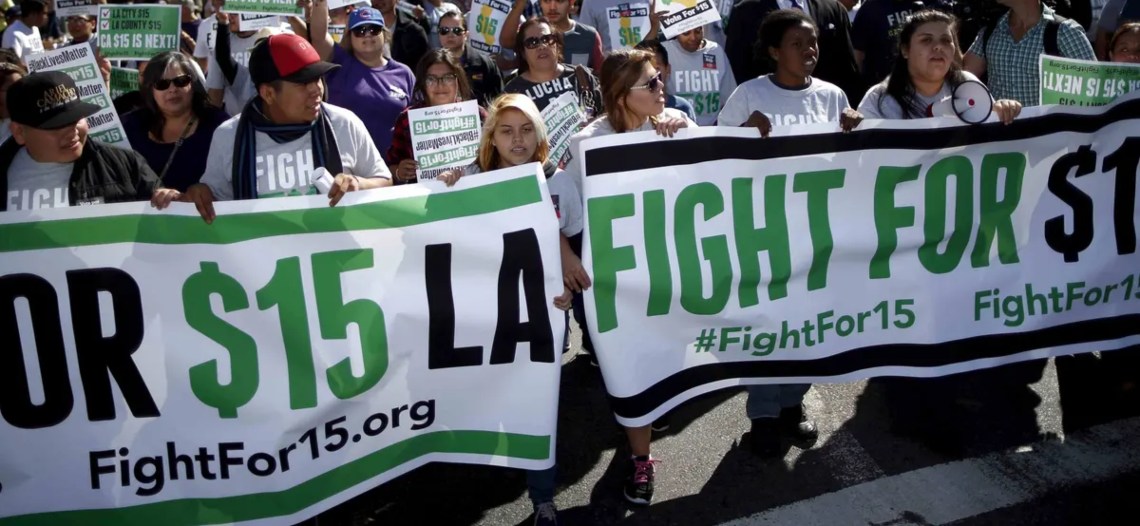
The Fight for $15 campaign launched in November 2014, organized by the BC Federation of Labour (BCFED), which represents over 500,000 unionized workers across the province. The goal was to push for $15 per hour minimum wage to increase minimum wages to reasonable levels and lift full-time workers above the poverty line.
At the time, BC’s minimum wage had stagnated for years. The provincial government offered only token increases – a 20-cent bump here, inflation indexing there – while housing costs, food prices, and transit fares climbed steadily. The BCFED’s campaign slogan captured the frustration simply: “Work should lift you out of poverty.”
Who Works for Minimum Wage? Dispelling the Myths
One of the campaign’s central tasks was challenging the stereotype that minimum wage earners are teenagers working part-time for pocket money. The data told a different story.
We gathered statistics from the BC Federation of Labour’s research and found that in 2014:
Common Myth | Reality in BC (2014) |
|---|---|
Minimum wage workers are mostly teenagers | 47% were age 25 or older; nearly 10,000 were over 55 |
They work temporary or new jobs | 55% had worked at their job for more than a year |
Only small businesses pay minimum wage | 46% worked for companies with 500+ employees |
These workers lack education | 14% held a university degree |
Gender is not a factor | 63% of minimum wage earners were women |
These numbers revealed that low-wage work in BC disproportionately affected women, older workers, immigrants, and Indigenous people – groups already facing economic barriers.
How the Campaign Unfolded
The Fight for $15 was part of a broader North American movement that began when fast-food workers in New York City staged walkouts in November 2012, demanding better wages. The movement gained momentum when SeaTac, Washington became the first jurisdiction to implement a $15 minimum wage in January 2014.
In BC, the campaign used creative tactics to build momentum. On the 15th of each month, organizers held events across the province – petition drives, rallies, and information sessions. Each month highlighted different aspects of the issue: students struggling with debt one month, senior workers the next.
The campaign built a broad coalition including the BC Teachers’ Federation, Canadian Centre for Policy Alternatives, Canadian Federation of Students, First Call BC, United Way, and dozens of other organizations. Even Vancouver Mayor Gregor Robertson endorsed the campaign.
Irene Lanzinger, then President of the BC Federation of Labour, framed the issue in terms that resonated:
“We know that many students are struggling to put themselves through school and make ends meet on minimum wage jobs. Post-secondary graduates are leaving school with an average of $35,000 of debt. That is not good for our young people, and not good for the economy.”
By 2016, the campaign had collected over 42,000 signatures. Polling showed 75-83% of British Columbians supported a significant minimum wage increase. The pressure was building.
Timeline: From Protest to Policy
- November 2012 – Fast-food workers in New York City stage first major $15 walkouts
- November 2013 – SeaTac, Washington becomes first North American jurisdiction to pass $15 minimum wage
- November 2014 – BC Federation of Labour launches Fight for $15 BC; minimum wage at $10.25
- April 2016 – First National Day of Action for $15 minimum wage across Canada
- May 2017 – BC NDP wins provincial election; commits to Fair Wages Commission
- November 2017 – BCFED submits formal recommendations to Fair Wages Commission
- February 2018 – BC government announces plan to reach $15.20 by 2021
- October 2018 – Alberta becomes first Canadian province to reach $15
- June 2021 – BC reaches $15.20 minimum wage
- June 2025 – BC minimum wage reaches $17.85 with automatic CPI indexation
What Did the Campaign Achieve?
The most visible result is the wage itself. British Columbia’s minimum wage increased from $10.25 in 2014 to $17.85 in 2025 – a 74% increase that far exceeded the campaign’s original $15 target.
But the systemic changes may prove more significant in the long run:
- Automatic CPI indexation: Starting in 2022, BC’s minimum wage adjusts annually based on inflation, removing it from political discretion.
- Elimination of the lower liquor server wage: Servers now receive the same minimum as other workers.
- Influence on other provinces: The campaign contributed to a broader shift in Canadian labour policy, with most provinces now using some form of inflation indexation.
How Minimum Wage Affects Different Industries
Minimum wage is often treated as a single benchmark, but its effects vary significantly across industries. A $17.85 hourly floor does not impact all sectors in the same way, depending on labour intensity, margins, and employment structure.
Industries such as retail, food services, hospitality, and personal care employ a high share of minimum-wage workers. In these sectors, the Fight for $15 translated into immediate and visible gains, lifting long-stagnant wages and improving baseline earnings.
Other parts of the economy adjust more gradually. Unionized workplaces, public services, and regulated sectors often absorb minimum wage increases through structured pay bands, where changes at the bottom influence broader wage scales over time.
As British Columbia’s labour market shifts toward service-based and digital work, minimum wage policy increasingly affects sectors that do not fit traditional employment models. This makes it useful to examine how wage floors apply beyond legacy industries.
How Much Do Workers Earn in the Gaming Industry
The online gaming industry is a clear example of how minimum wage works in a modern, regulated digital sector. While senior technical and compliance roles usually earn well above the minimum, many everyday operational jobs are still closely tied to provincial wage levels.
In British Columbia, regulated gaming platforms hire workers for customer support, account verification, platform operations, and moderation. Entry-level and hourly roles in these areas are often paid at or slightly above the minimum wage, especially for new or part-time employees. As online platforms have become more popular, the number of players has grown, and so has the need for larger support and operations teams. This growth means more roles where minimum wage plays an important role.
At the same time, the market itself has become crowded, with many platforms competing for users. This is why people often look at how the best online Casino in Canada is selected, using independent industry comparisons that explain differences between platforms in terms of features, size, and overall user experience. These resources help readers understand the market and make informed choices, without focusing on employment or pay.
Because the sector operates under provincial oversight, employers must follow standard labour and wage laws. When minimum wage increases, those changes directly affect eligible workers, much like in retail or hospitality. What sets the gaming industry apart is stability: many platforms operate year-round and offer steady hours for staff earning near the wage floor. Over time, rising minimum wages have also pushed companies to adjust internal pay levels to keep experienced workers.
What Is Minimum Wage in BC and Across Canada Now?
For anyone wondering how much minimum wage in BC is right now, the answer is $17.85 per hour as of June 1, 2025. The BC minimum wage increase schedule follows a predictable pattern: each June 1, the rate adjusts based on the previous year’s Consumer Price Index for British Columbia. The expected minimum wage in BC for June 2026 is approximately $18.25.
Here is how minimum wage in British Columbia compares to other Canadian jurisdictions:
Province/Territory | Current Rate | Next Increase | New Rate |
|---|---|---|---|
Nunavut | $19.75 | Sept 2026 | TBD |
Yukon | $17.94 | April 2026 | ~$18.50 |
British Columbia | $17.85 | June 2026 | ~$18.25 |
Federal | $17.75 | April 2026 | ~$18.15 |
Ontario | $17.60 | Oct 2026 | ~$17.95 |
Prince Edward Island | $16.50 | April 2026 | $17.00 |
Nova Scotia | $16.50 | April 2026 | $16.75 |
Quebec | $16.10 | May 2026 | $16.60 |
Manitoba | $16.00 | Oct 2026 | ~$16.45 |
Newfoundland & Labrador | $16.00 | April 2026 | ~$16.35 |
Northwest Territories | $16.95 | Sept 2026 | TBD |
New Brunswick | $15.65 | April 2026 | ~$15.90 |
Saskatchewan | $15.35 | Oct 2026 | TBD |
Alberta | $15.00 | — | — |
Source: Government of Canada Minimum Wage Database and provincial labour ministries, current as of February 2026.
What stands out in this table is Alberta. The province reached $15 first in October 2018, a milestone celebrated at the time, but has not increased its minimum wage since. Seven years of inflation have eroded that purchasing power significantly.
Is $17.85 Enough in 2025?
This brings us to the uncomfortable question. The Fight for $15 succeeded beyond its original target. But the economic landscape has shifted dramatically since 2014.
When the campaign launched, $15 was calculated to put a full-time worker about 10% above Statistics Canada’s Low Income Cut-Off – a common measure of the poverty line. That calculation assumed 2014 prices.
Since then, cumulative inflation in Canada has exceeded 30%. Housing costs in Vancouver have increased even faster. A rough adjustment suggests that $15 in 2014 purchasing power would require approximately $19.50–20.25 in 2025.
By this measure, BC’s current minimum wage of $17.85, while substantially higher than $15, may still leave workers below where the campaign originally intended them to be.
The living wage calculation, which accounts for actual costs in specific communities, reinforces this concern. According to Living Wage BC’s 2025 report, the living wage in Metro Vancouver is now $27.85 per hour – a full $10 higher than the minimum wage. More than half a million workers in Metro Vancouver, representing 36% of all paid employees, earn less than this living wage and face ongoing financial hardship.
What Next?
The Fight for $15 achieved its stated goal and then some. BC workers now earn nearly $18 per hour at minimum, with guaranteed annual increases. The campaign helped shift public opinion, influenced policy in multiple provinces, and established inflation indexation as a standard practice.
But the underlying question: whether minimum wage should ensure a life above poverty, remains unresolved. The gap between minimum wage and living wage in expensive cities like Vancouver continues to widen.
Some labour advocates have begun discussing what a “Fight for $20” might look like. Others argue that minimum wage alone cannot address affordability without parallel investments in housing, childcare, and transit.
What we know is that the original Fight for $15 demonstrated something important: grassroots campaigns can reshape policy. The 42,000 signatures, the monthly rallies, the coalition of students and workers and community groups – these efforts produced measurable change.
Whether that change is sufficient depends on how we define the goal. If the objective was $15 per hour, the campaign won. If the objective was ensuring that work lifts people out of poverty, the work continues.
Key Takeaways
- BC’s minimum wage increased from $10.25 (2014) to $17.85 (2025) – a 74% increase
- The BC minimum wage increase dates follow a predictable annual schedule each June 1
- Minimum wage in Vancouver and across BC is now tied to inflation through CPI indexation
- Alberta’s wage stagnation since 2018 shows why automatic indexation matters
- Canada ranks among the top 10 countries globally for minimum wage purchasing power
The gap between minimum wage ($17.85) and living wage ($27.85) in Metro Vancouver is now $10 per hour